







Laser or Microneedling for Acne Scars: Which Treatment Works Best?
Once active acne has settled, the marks it leaves behind can sometimes become the bigger concern. You may notice shallow indentations across the cheeks, deeper individual scars, enlarged-looking pores or an uneven skin texture that becomes particularly obvious in certain lighting.
At The Aesthetics Doctor, we regularly assess patients with different types and severities of acne scarring. Established scars involve structural changes within the skin, which is why skincare alone can only do so much and treatments designed to stimulate collagen and remodel damaged tissue may be considered.
Two of the most commonly discussed options are laser and microneedling for acne scars. Both can improve skin texture and encourage collagen production, but they do not work in exactly the same way and neither is automatically the better treatment for every patient.
The starting point is therefore not simply choosing between laser and microneedling. It is establishing what type of acne scarring you have, how established it is and what is happening in the surrounding skin.
What Type of Acne Scarring Do You Have?
Acne scarring can look very different from one person to another. The first distinction is between true textural scars, where the structure of the skin has changed, and post-acne marks, where the skin remains flat but redness or pigmentation persists after a breakout.
Textural acne scars can also vary in shape and depth. Some are shallow and create a gently uneven or rippled surface, while others form more defined depressions or deeper, narrower pits. These differences reflect how the skin has healed and how collagen has been lost or reorganised following inflammation.
You may also have several changes at the same time. For example, shallow scars can sit alongside enlarged pores, pigmentation, redness and occasional active breakouts. This is why two people with “acne scarring” can have quite different skin concerns.
The distinction matters when comparing laser and microneedling because different scar characteristics require different types and depths of skin remodelling. Mild, superficial texture may be approached differently from deeper or more established scarring. If active acne is still present, this also needs to be considered, as continuing breakouts can cause further marks and scars.
Identifying whether the main concern is scar depth, uneven texture, persistent colour change, active acne or a combination of these therefore provides the starting point for deciding which treatment approach is appropriate.
How Does Microneedling Work for Acne Scars?
Microneedling uses very fine needles to create controlled micro-injuries within the skin. These tiny channels initiate a repair response, encouraging the production and remodelling of collagen within the treated tissue.
That process is particularly relevant to acne scarring because depressed scars are partly related to changes in the skin's underlying collagen structure.
Rather than filling an individual scar, microneedling gradually encourages the skin to remodel itself.
Microneedling is used for concerns including acne and uneven skin texture. A standard treatment takes around 30 minutes, with temporary redness, swelling or dryness possible afterwards.
The improvement is progressive rather than immediate. Collagen remodelling takes time, and acne scarring would usually be approached as a course rather than expecting one treatment to completely change established scars.
For a broader explanation of how the treatment affects skin quality as well as scarring, you can also read our guide to the benefits of microneedling.
What About RF Microneedling for Acne Scarring?
RF microneedling takes the basic principle of microneedling further by combining needles with radiofrequency energy.
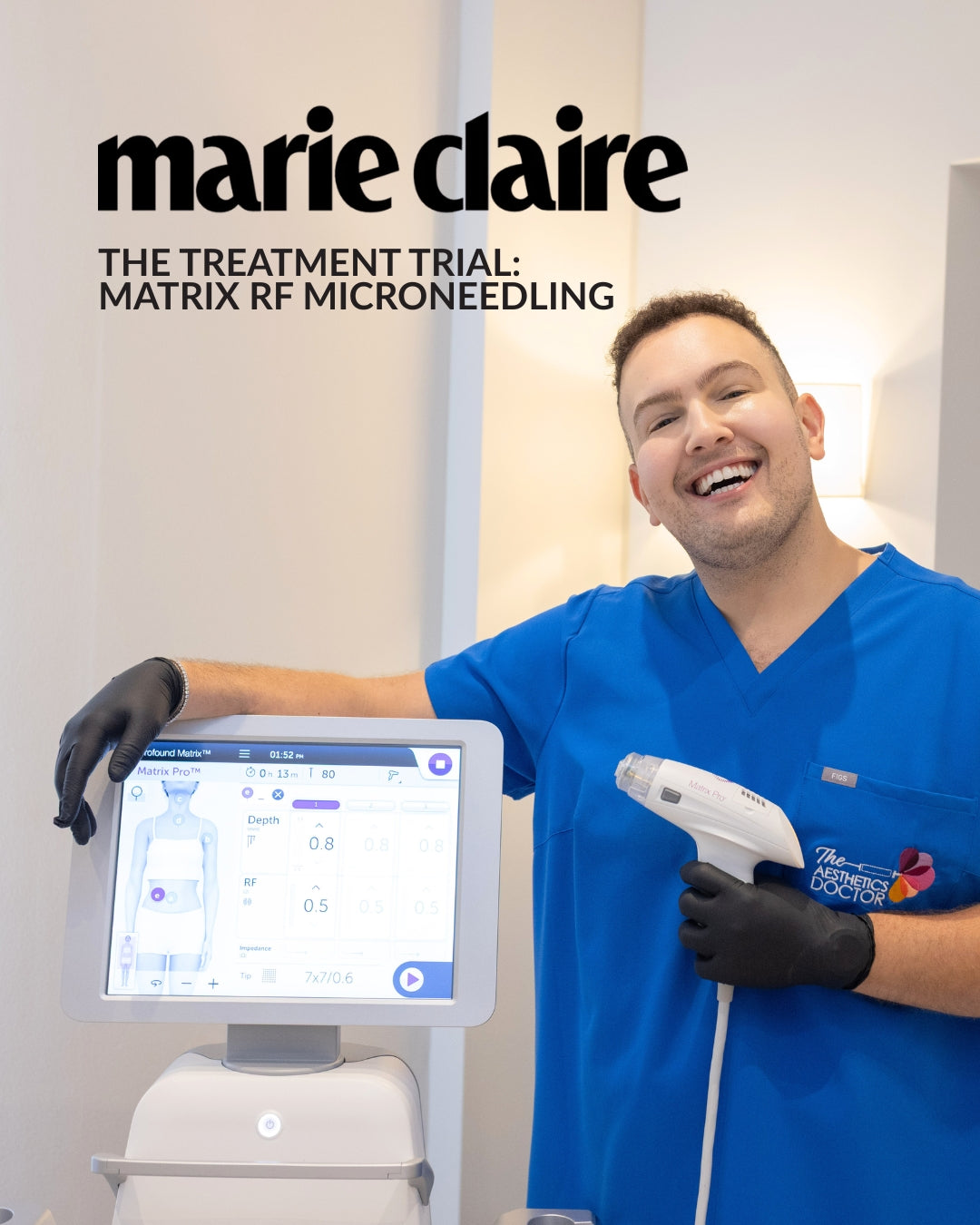
Matrix RF Microneedling allows controlled radiofrequency energy to be delivered into the skin while creating the mechanical stimulation associated with microneedling.
For acne scarring, this means collagen remodelling can be stimulated through more than one mechanism. Rather than relying on needle injury alone, radiofrequency introduces controlled thermal stimulation within the tissue.
This can become relevant when scarring is more established or when there are other concerns around texture and skin quality at the same time.
It is not simply a case of RF microneedling being “better” than conventional microneedling. Treatment intensity should match the condition of the skin and the changes being treated. A more intensive procedure is not automatically a more appropriate one.
How Does Laser Treatment Work for Acne Scars?
Laser approaches acne scarring differently.
The Alma Harmony platform incorporates different technologies for different skin concerns rather than relying on one laser for every problem.
For acne scars, two particularly relevant options are iPixel and ClearSkin.
iPixel is used when resurfacing is required. Fractional treatment creates controlled microscopic treatment zones within the skin while leaving surrounding tissue available to support healing. This stimulates a repair response and collagen remodelling, helping improve uneven texture and acne scarring over time.
This type of approach can become useful when the surface and structure of the skin require more substantial remodelling than we would expect from a lighter treatment.
What Is ClearSkin and When Might It Be Used?
Not every patient seeking treatment for acne scars has completely inactive acne.
ClearSkin, part of the Alma Harmony platform, uses a cooled Er laser and can address acne-prone skin while also supporting collagen regeneration. It is used for concerns including active acne, acne scarring, enlarged pores and skin texture.
That distinction is important because treating existing scars is only one part of managing acne-prone skin.
If someone is still experiencing breakouts, concentrating only on old scars may be premature. New inflammatory lesions have the potential to create further marks or scars, so the treatment plan may need to consider both the ongoing acne and the damage already present.
In these cases, ClearSkin may form part of a broader acne treatment strategy rather than treating the scar as an isolated concern. Our guide to acne treatments and how they work looks more closely at managing acne itself.
Laser vs Microneedling for Acne Scars?
Although both treatments stimulate collagen and improve acne scarring, they do so in different ways and may be better suited to different types and severities of scarring.

Can Acne Scars Be Completely Removed?
Complete removal is not a realistic way to think about acne scar treatment.
The aim is usually to reduce scar depth, soften uneven texture and make the overall skin surface appear smoother and more uniform. How much improvement is achievable depends on the type and depth of the scars, skin characteristics and how the tissue responds to treatment.
This is why claims that one laser or one microneedling treatment can “erase” acne scars should be treated cautiously.
In more advanced cases, the scar pattern needs to be considered as a whole to establish which elements are realistically responsive to the treatments available.
FAQs About Laser and Microneedling for Acne Scars
Should I Treat Active Acne Before Microneedling My Scars?
Active inflammatory acne needs to be assessed before scar-focused microneedling. Treating across inflamed lesions may not be appropriate, and preventing further scarring can take priority over correcting existing scars. ClearSkin is one option available for acne-prone skin as part of the Alma Harmony platform.
Does Acne Scar Treatment Hurt?
Sensation varies according to the procedure and treatment intensity. Microneedling can feel prickly or uncomfortable, while laser treatment may create heat or stinging. Comfort measures can be discussed according to the specific treatment being planned.
Can Laser Make Acne Scarring Worse?
Laser treatment needs to be selected and performed appropriately for the patient's skin type, scar pattern and current skin condition. Overly aggressive or unsuitable treatment can increase the risk of complications, which is why assessment and appropriate treatment settings are important.
Can I Treat Acne Scars If I Have Darker Skin?
Patients with darker skin tones can still be assessed for acne scar treatment, but skin type is an important part of deciding which technology and treatment parameters are appropriate. Particular consideration needs to be given to the risk of post-inflammatory pigmentation rather than using the same protocol for every complexion.
Can Acne Scars Come Back After Treatment?
A scar that has remodelled does not simply “grow back”, but new acne can create new scars. Maintaining control of acne therefore remains important even when treatment has moved towards correcting existing scarring.
Choosing the Right Acne Scar Treatment
The best approach to acne scarring depends on what is happening within your skin. Microneedling may be suitable for milder texture, while Matrix RF Microneedling or Alma Harmony iPixel may be considered for more established scarring. If active acne is still part of the picture, ClearSkin may also be relevant.
A consultation can help identify the type and depth of your scarring and whether laser, microneedling or a staged approach makes the most sense for your skin.
If you would like to explore your options, you can book a consultation at The Aesthetics Doctor in London, Leeds or Alderley Edge, Cheshire, also serving patients from Manchester and surrounding areas.
We'd love to hear from you
If you have any questions, please fill in this contact form, and our team will get back to you as soon as possible.
Phone: 020 7305 7777