





Why Do Some People Age Faster Than Others? A Doctor Explains the Science of Facial Ageing
We all age, but we do not all age in the same way or at the same rate.
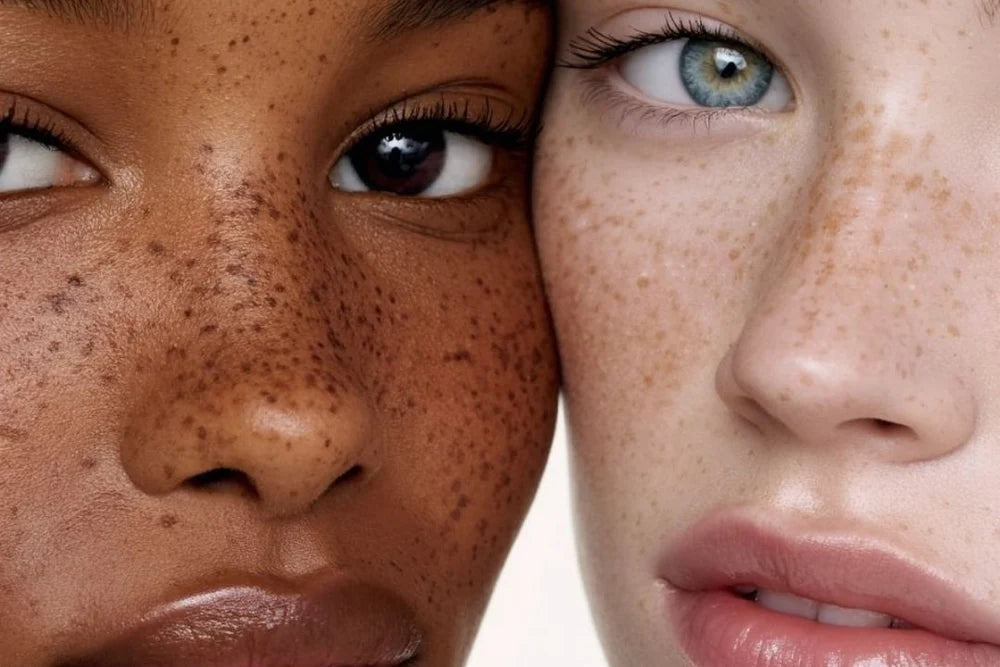
Two people of exactly the same age can look remarkably different. One may begin to notice deeper lines, facial hollowing or a softer jawline in their thirties, while another retains relatively firm skin and facial volume well into their forties or beyond.
This is because facial ageing is not determined simply by age. What we see on the surface reflects a series of changes taking place within the skin and deeper facial structures, influenced by both our biology and the way we live.
At The Aesthetics Doctor, this is why we look beyond an individual line, hollow or change in contour. Understanding what has caused it is an important part of deciding whether treatment is appropriate and what approach is most likely to help.
So, what makes one face appear to age faster than another?
Why Do Some People Look Older Than Their Age?
The skin, fat, muscle and bone all change over time, but the rate and pattern of those changes are highly individual.
Collagen and elastin decline, facial fat can reduce or shift, and gradual changes to the underlying bone can affect structural support. Genetics influence when and where these changes become visible, meaning some people naturally maintain facial fullness and firmness for longer.
External factors can accelerate certain changes. UV exposure contributes to collagen and elastin damage, fine lines, pigmentation and uneven texture, while smoking is also associated with premature skin ageing. Hormonal changes, particularly around menopause, can affect collagen, hydration and skin thickness. Significant weight loss can make hollowing or existing laxity more noticeable.
This is why identifying the cause matters. Someone whose main concern is photoageing and declining skin quality may benefit more from microneedling, iPixel laser or Alma Harmony BioBoost, for example, than from a treatment designed to replace facial volume.
How Do Volume Loss and Facial Movement Affect Ageing?
Loss of facial volume can change the proportions and support of the face. The mid-face may become flatter, the temples and under-eyes more hollow and the jawline less defined. At the same time, repeated expressions such as smiling, frowning and raising the eyebrows can gradually leave lines that remain visible even when the face is at rest.
These changes require different approaches. Dermal fillers can be used strategically where genuine volume loss or reduced structural support is contributing to an aged appearance, while anti-wrinkle injections reduce selected muscle activity responsible for dynamic expression lines.
Correctly identifying the cause matters. Adding filler where laxity is the dominant problem can make the face appear heavier without addressing the concern, while a line caused partly by lost support may not respond adequately if it is treated purely as a muscle-related wrinkle.
What Role Does Collagen Loss Play in Facial Ageing?
Collagen provides much of the skin's structural support. As we age, collagen production and renewal decline, contributing to reduced firmness, elasticity and resilience. For some people, these changes in tissue quality are more noticeable than facial volume loss.
This is where collagen-stimulating treatments may become relevant.
JULÄINE is a poly-L-lactic acid treatment designed to stimulate the body's own collagen response. Rather than relying on immediate volume replacement, improvement develops progressively as collagen production is stimulated.
Ellansé takes a different approach, providing structural correction while also stimulating collagen production over time.
Neither should simply be viewed as an alternative name for conventional dermal filler. Choosing between biostimulation and volume replacement depends on factors including facial anatomy, skin quality, existing volume loss and the changes we are trying to address.
Can Skin Quality Make You Look Older Even Without Sagging?
Yes. You can have relatively good facial structure and little obvious sagging but still feel that your face looks older.
Dehydration, fine lines, uneven texture, pigmentation and declining elasticity can all affect how smooth, bright and resilient the skin appears. In these cases, adding facial volume may do very little to improve the actual concern.
For milder changes, skin boosters may be considered when hydration and general skin quality are the priority. Polynucleotides, including Ameela®, can be useful where fine lines and changes in delicate areas such as the under-eyes contribute to a tired or aged appearance.
Where texture and collagen remodelling are more important, microneedling or iPixel fractional laser may be considered instead.
The treatment should therefore reflect what is happening within the skin rather than assuming that looking older automatically means the face has lost volume.
Does Facial Muscle Tone Change With Age?
Yes. Facial ageing also involves changes in the deeper tissues that influence facial shape and movement.
Muscle activity, changing tissue support and facial descent can all contribute to changes in contour. This is different from treating individual expression lines caused by repeated muscle contraction.
EMFACE is one option available at The Aesthetics Doctor where early laxity and reduced facial definition are concerns. It combines synchronised radiofrequency with HIFES™ technology to target the skin and selected underlying facial muscles.
It may therefore be considered where a non-invasive approach is appropriate and the concern extends beyond an isolated wrinkle or area of volume loss. More significant volume loss, established laxity or deeper lines may require a different approach.
How Do Doctors Decide Which Facial Ageing Treatments Are Appropriate?
There is no single treatment for facial ageing because the underlying changes differ from person to person. At The Aesthetics Doctor, we assess the face as a whole, looking at skin quality, collagen loss, facial volume, muscle movement, pigmentation and laxity to understand what is contributing most to the changes you can see.
From there, treatment can be matched to the underlying concern rather than chosen simply because of age.

Can You Slow Down Facial Ageing?
You cannot stop biological ageing, but you can reduce some of the external factors that accelerate visible changes.
Consistent sun protection is particularly important because cumulative UV exposure is a major contributor to photoageing. Appropriate skincare can support skin health, while avoiding smoking and maintaining good general health can also help.
Aesthetic treatments can then be considered when there is a specific change worth addressing rather than being started simply because you have reached a particular age.
For someone with early changes, maintaining skin quality may be the priority. As the face evolves, collagen stimulation or subtle structural support might become relevant. Another person of the same age may need something entirely different.
The most sensible long-term approach is therefore one that evolves with your face rather than attempting to prevent every possible sign of ageing before it occurs.
Frequently Asked Questions About Facial Ageing
At What Age Does Your Face Start Ageing?
There is no single age at which facial ageing suddenly begins. Biological changes develop progressively throughout adulthood, but genetics, sun exposure, hormones and facial anatomy all influence when they become visible. Chronological age alone is therefore a poor guide to whether aesthetic treatment is appropriate.
Why Has My Face Suddenly Aged?
Sometimes facial changes become more noticeable over a relatively short period following significant weight loss, hormonal changes or illness. In other cases, gradual changes in skin quality, volume or laxity have simply reached the point where they become easier to see.
Which Part of the Face Usually Ages First?
There is no universal pattern. Some people first notice crow's feet or forehead lines, while others see changes around the eyes, flatter cheeks, pigmentation or reduced jawline definition. Genetics and individual facial anatomy have a significant influence on where ageing becomes visible first.
Do Men and Women Age Differently?
Differences in facial anatomy, skin characteristics, hormones and fat distribution can influence how ageing appears in men and women. There is still considerable variation between individuals, however, so facial ageing is best assessed on an individual basis.
Is It Better to Start Aesthetic Treatments Early?
Not necessarily. Starting treatment before there is a clear indication does not automatically produce a better long-term result. It is more useful to assess what has actually changed and consider treatment when there is something specific and appropriate to address.
Understanding How Your Face Is Ageing
Facial ageing is not one process. Changes in skin quality, collagen, facial volume, muscle activity, fat distribution and underlying structure occur at different rates, which is why there is no single treatment or ideal age to begin treatment.
Understanding which of these changes is responsible for what you can see is the most useful starting point.
At The Aesthetics Doctor, consultations assess the face as a whole before considering whether treatment is appropriate and which approach is most relevant. If you would like to understand your own pattern of facial ageing, you can book a consultation at our clinics in Mayfair, London, Alderley Edge in Cheshire or Leeds.
We'd love to hear from you
If you have any questions, please fill in this contact form, and our team will get back to you as soon as possible.
Phone: 020 7305 7777